History, Art and Tradition in the Golden City
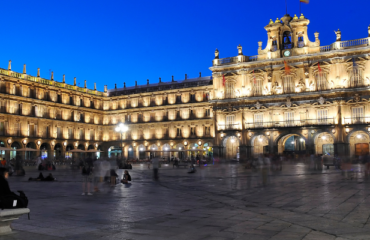
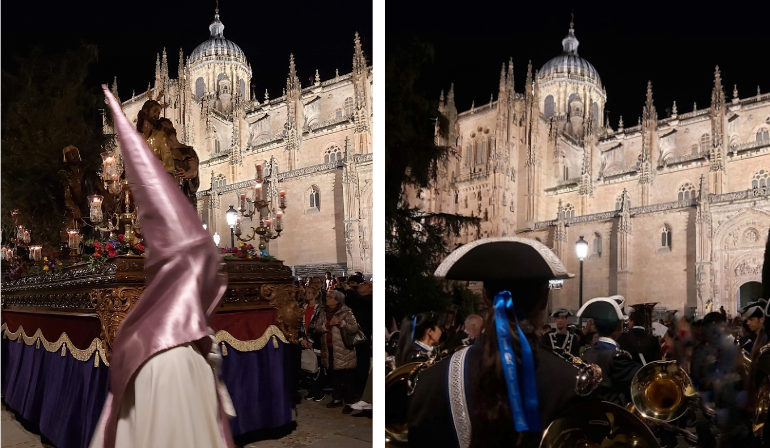
Holy Week in Salamanca is not just any celebration; it is the moment when “Little Rome” displays all its majesty. Declared of International Tourist Interest in 2003, this festivity is a constant dialogue between Villamayor stone, Castilian silence, and centuries of university history. If you are looking for an experience that combines devotion with world-class art, Salamanca in 2026 is your destination.
A Journey Through Time: Roots and Legacy
Salamanca’s processional tradition has its roots in the 13th century, with the arrival of mendicant orders such as the Franciscans and Dominicans. However, its era of greatest splendor emerged during the Baroque period, when the city was filled with carvings by illustrious sculptors such as José de Larra Churriguera or Juan de Juni.
What truly differentiates Salamanca from other cities is its link with the University. Founded in 1218, the academic institution has shaped the character of the processions. A clear example is the University Brotherhood, where professors and students actively participate, uniting faith with academic knowledge in a symbiosis that can only be felt here.
✨Key Moments and Curiosities that “Make the City”
To understand Salamanca’s Holy Week, one must know its small stories, those passed down from generation to generation:
The “Drama” of the Descent On Good Friday, in the Campo de San Francisco, the Act of the Descent is reenacted. It is not just a procession; it is a sacred theatrical performance dating back to the 17th century. Watching the brotherhood members lower the image of Christ from the cross in a silence broken only by the wind is, quite simply, breathtaking. It is the moment when the city stands still.
The Offices and the “Venia” Maundy Thursday is the day of academic elegance. In the University Chapel, the Offices are celebrated with a pomp that recalls the Golden Age. Doctors wear their colored mozzettas and birrettas according to their faculty (red for Law, yellow for Medicine, blue for Science…). It is one of the few occasions in the year where academic and religious protocols merge so strictly.
Lunes de Aguas: The Most Curious “After-Party” in Spain One cannot talk about Holy Week in Salamanca without mentioning its curious epilogue. In the past, during Lent, “ladies of easy virtue” were expelled to the other side of the Tormes River so as not to distract the faithful. On the Monday following Easter Monday, students would cross the river in boats to bring them back with music and food.
Today, that tradition has evolved into Lunes de Aguas, a festive day where the entire city goes out to the countryside to eat hornazo (a hearty pie filled with pork loin, ham, chorizo, and hard-boiled egg). It is the perfect contrast after a week of fasting and reflection.
Essential Itinerary for 2026
To help you make the most of your visit, here are the spots where the city’s “vibe” reaches its peak:
- Departure of the University Brotherhood (Holy Tuesday): Watching the Cristo de la Luz image emerge from the Patio de Escuelas Menores while the chains of the penitents rattle is an almost mystical experience.
- The Procession of Silence (Holy Saturday): One of the oldest, winding through the narrowest streets of the old town by candlelight.
- The Encounter (Easter Sunday): Joy erupts in front of the Cathedral when the images of the Risen Jesus and the Virgin Mary meet, under a rain of petals and the ringing of bells.
🔗 Plan your route: To find exact schedules, last-minute route changes, and the history of each of the 18 brotherhoods, visit the:
Programa oficial Semana Santa 2026
Expert Tips for the Visitor
- The “Golden Stone”: The best time for photos is during sunset (the “golden hour”), when the Villamayor stone of the monuments takes on a reddish hue that seems illuminated from within.
- Clothing and Footwear: Do not underestimate the cold of the Castilian plateau. At night, temperatures plummet. Furthermore, the streets are made of uneven stone; leave your thin-soled shoes at home.
- Gastronomy: In addition to the hornazo, take the opportunity to try the candied almonds made by the nuns or a good serving of chanfaina salmantina in the bars along Rúa Mayor.
Salamanca during Holy Week is an open-air history lesson. It is sobriety, it is art, and above all, it is a city that feels proud of its past.