Mystery, Symbolism, and Legend
A Small Detail on the Façade That Has Become a Student Icon
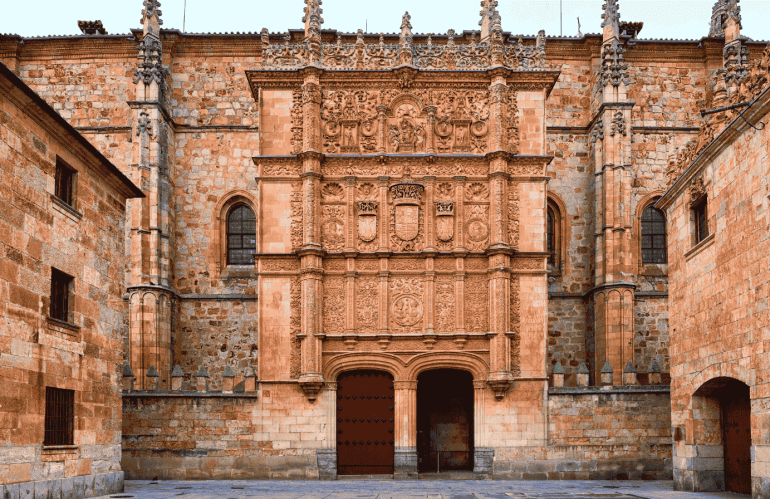
The Frog of Salamanca (in reality, many experts maintain that it is a toad) is an ornamental element carved into the Plateresque façade of the Escuelas Mayores building of the University of Salamanca. This tiny piece has become, over time, a symbol, tradition, and mystery for students and visitors.
Brief History and Key Facts
- The façade where the amphibian appears was carved around the year 1553.
- The frog (or toad) is perched atop a skull, a detail that sparks multiple symbolic interpretations.
- Its presence is small and subtle, which means many visitors pass by without noticing it.
Curiosities and Legends
- One of the best-known legends: students who find the frog without assistance will have good luck and pass their exams.
- Another version adds that married people can make a wish upon finding it.
- Some more serious symbolic interpretations suggest that the frog represents lust, temptation, or sin, and the skull is a reminder of death or human vanity.
- There are those who argue that the sculptor included it as a personal signature, similar to an author’s ‘graffiti’.
- Another, more symbolic hypothesis: the frog is linked to the Spanish saying “when frogs grow hair” (meaning something that will never happen). Perched upon the bald skull, the figure would convey the impossibility of resurrection or the fulfillment of certain dogmas.
- During recent restorations, ancient inscriptions and graffiti were discovered on the façade, which adds further mystery to its iconography.